
A sectional can make a living room feel finished fast, but only when the layout works with the way you actually live. This guide to sectional configurations helps you sort through chaises, L-shapes, U-shapes, modular pieces, and sleeper options before a beautiful sofa becomes a daily obstacle.
The best choice is not always the largest sectional your room can hold. It is the one that gives everyone a comfortable seat, leaves room to move, and creates a natural place to relax, host, stream, snack, or stretch out after work.
Start With Your Room, Not the Product Photo
Sectionals look different in a bright, open showroom image than they do in a real apartment, family room, or open-concept home. Before comparing styles, measure the length and width of the area where the sofa will sit. Then measure doorways, hallways, stairs, elevators, and tight turns along the delivery path.
Use painter's tape or sheets of paper to map the sectional footprint on the floor. This simple step reveals whether the chaise blocks a walkway, whether a corner feels too crowded, or whether you still have enough clearance for a coffee table. Aim for about 30 to 36 inches of walking space in high-traffic paths whenever possible. In a compact room, even a few inches can change how comfortably the space functions.
Also think beyond the sofa itself. A sectional needs visual breathing room around rugs, accent chairs, media consoles, and side tables. If your living room doubles as a playroom, home office, or hangout zone, preserving an open route through the room matters as much as adding extra seats.
Know the Main Sectional Configurations
L-shaped sectionals
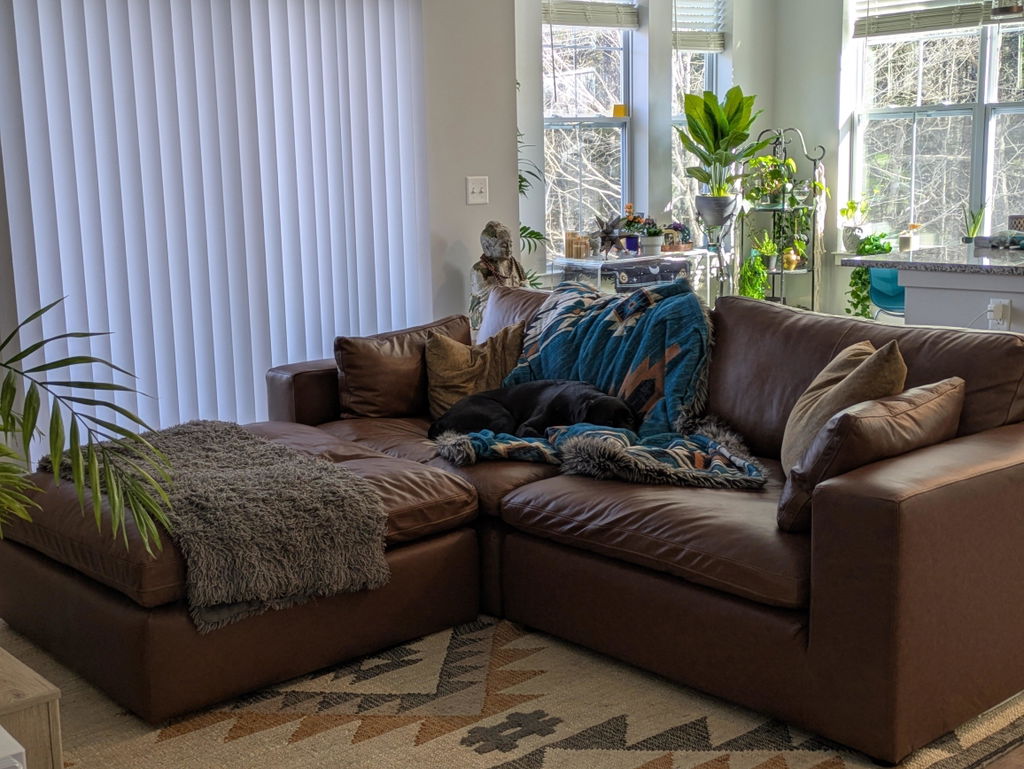
An L-shaped sectional is the everyday favorite for good reason. It creates generous seating without taking over the entire room, making it a strong fit for apartments, condos, and medium-size living rooms. It can anchor a conversation area, define a seating zone in an open floor plan, or tuck neatly into a corner.
The key decision is the return side. When you face the sectional, does the shorter extension sit on the left or right? Retailers may describe this as left-arm-facing or right-arm-facing, often shortened to LAF and RAF. Those terms usually refer to the position when you are facing the piece, but always check the product diagram. A reversed chaise can turn a great layout into a frustrating one.
Chaise sectionals
A chaise sectional gives one person a dedicated place to put their feet up without requiring a full recliner. It is ideal for movie nights, smaller households, and rooms where you want a relaxed look with a lighter footprint than a U-shaped sofa.
Choose the chaise side based on how people enter and move through the room. For example, if the chaise lands in front of a doorway or cuts across the path to the kitchen, it may feel awkward every day. In many spaces, placing the chaise along a wall or toward a lower-traffic side keeps the layout open.
U-shaped sectionals
U-shaped sectionals are built for gathering. With seating on three sides, they make conversation easier and give families, guests, and pets room to settle in. They are especially effective in larger family rooms, finished basements, and open layouts where the sofa can float away from the walls.
The trade-off is scale. A U-shape needs enough space in its center for a coffee table, ottoman, or clear legroom. It can overwhelm a narrow room and make television viewing less direct for seats on the ends. If your priority is hosting, a U-shaped sectional may be worth the footprint. If you need flexibility or have limited square footage, an L-shape may serve you better.
Modular sectionals
Modular sectionals are made from individual pieces that can be arranged, expanded, or separated as your needs change. They are a practical match for renters, people who move often, and households that want the freedom to refresh a room without replacing the entire sofa.
A modular layout can start as a compact two-piece chaise sectional, then grow with an armless chair or ottoman later. The flexibility is a major advantage, but measure each module and the finished arrangement carefully. Loose, deep pieces can look casual and inviting, yet they may require more floor space than a traditional tight-frame sectional.
Sleeper and reclining sectionals
A sleeper sectional adds overnight flexibility without setting aside a guest room. It is a smart option for a home office, apartment, or living room that regularly hosts family. Before choosing one, check the fully opened bed dimensions, not just the sofa dimensions. You need a clear path in front of the sectional when the mattress is extended.
Reclining sectionals bring a lounge-ready feel to media rooms and family spaces. They often include cup holders, consoles, power reclining seats, or adjustable headrests. Those features are convenient, but they need clearance behind and in front of the sofa. A reclining sectional pushed tightly against a wall may not be able to do what you bought it to do.
Choose Left-Facing or Right-Facing With Confidence
The right orientation comes down to traffic flow, focal points, and sightlines. Stand at the room entrance and imagine walking in. Your sectional should welcome you into the space, not create a wall that forces you to squeeze around it.
If your television is the focal point, keep the main seats facing it and place the chaise or return where it does not block the view from other seats. If the room centers on a fireplace, consider whether the sectional will face it directly or frame it from one side. In open-concept homes, the back of the sectional can act as a subtle divider between the living room and dining area.
For a reversible chaise, you have more room to adjust after delivery. That flexibility is valuable in first apartments and changing homes. For fixed-orientation sectionals, confirm the configuration before ordering, especially if the product photo shows multiple pieces or a mirrored layout.
Match the Configuration to Everyday Life
A great sectional supports your routines, not just your Pinterest board. Families with young kids may prefer performance fabric, rounded edges, and a configuration that keeps an open play area nearby. Pet owners may want durable upholstery and a lower profile that is easy for pets to climb onto. If you host friends often, prioritize seat count and a layout that lets people face one another.
Seat depth matters, too. Deep cloud-style sectionals offer an inviting, sink-in feel and plenty of room to curl up. They are perfect for long movie nights and laid-back lounging, though shorter guests may prefer added back cushions or a slightly shallower design for easier upright sitting. Structured sectionals tend to look more tailored and can work beautifully in formal living rooms or smaller spaces where a cleaner silhouette helps the room feel open.
Think about your coffee table choice at the same time. An ottoman can soften a large U-shape and create extra flexible seating. A round coffee table improves movement around a chaise sectional. A rectangular table usually pairs naturally with an L-shape, as long as there is enough room to reach it from every seat.
Avoid the Most Common Sizing Mistakes
The biggest mistake is measuring only the wall. Sectionals extend into the room, so record the full width and depth of the finished configuration. Include arm width, chaise depth, reclining clearance, and space for opening a sleeper.
Another common issue is choosing a sectional that fits the room but cannot fit through the home. Review the dimensions of each separate piece, along with packaging details when available. A modular sectional or a design with detachable backs can be easier to deliver into upper-floor apartments, narrow row homes, and spaces with tight staircases.
Finally, do not buy by seat count alone. A five-seat sectional with wide arms and deep cushions may occupy far more space than a six-seat modular option. Compare the overall dimensions, then picture how many people will use it on an ordinary evening versus a holiday gathering.
Build a Living Room You Will Actually Use
The right sectional configuration should make your room feel more comfortable the moment you walk in. Measure carefully, choose an orientation that protects the flow of the space, and be honest about whether your home needs a cozy chaise, a party-ready U-shape, or adaptable modular seating.
At Dreamee Home, curated sectional styles make it easier to find a look that feels current while staying focused on comfort, value, and everyday use. Choose the layout that works for your life now, with enough flexibility to keep working when the next movie night, move, or family gathering arrives.