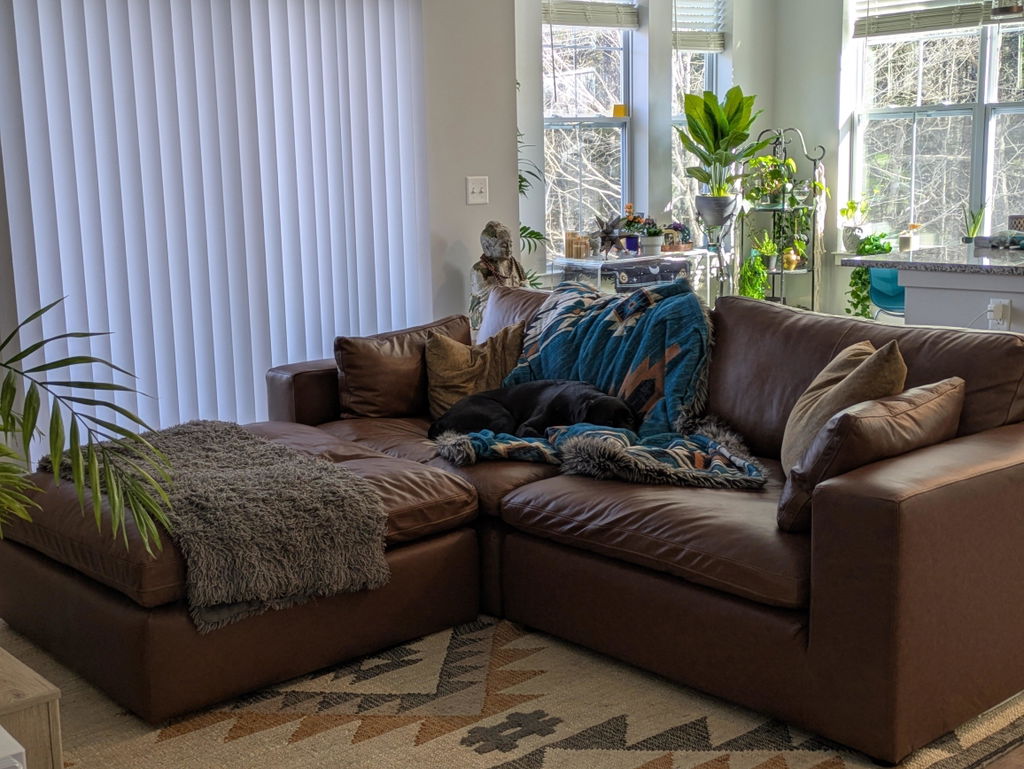

A sectional can make a living room feel finished fast - but the wrong rug size can throw the whole space off. If you’re wondering what size rug under sectional works best, the short answer is this: most sectionals need at least an 8x10 rug, and many look better on a 9x12. The right choice depends on your sectional’s shape, your room size, and how much floor you want to show.
What size rug under sectional usually looks right?
For most living rooms, a 5x7 rug is too small under a sectional. It can make the seating area feel disconnected, especially if the rug only reaches the coffee table and leaves the sofa floating outside it. That setup often works with a loveseat or a small apartment sofa, but sectionals usually need more visual weight underneath them.
An 8x10 rug is the most common starting point. It gives you enough surface area to anchor the front legs of the sectional and still leave space for a coffee table. If your sectional is larger, especially an L-shaped or chaise sectional, a 9x12 often creates a more balanced look. In oversized rooms or open layouts, a 10x14 may be the better fit.
The goal is simple: the rug should feel like it belongs to the seating area, not like it was dropped in front of it as an afterthought.
The easiest rug sizing rule to follow
A good rule is to place at least the front legs of the sectional on the rug. That creates a clear, grounded seating zone without requiring an oversized rug that covers half the room. If you have the space and budget, placing all legs on the rug can look even more polished, especially in larger rooms.
There should also be enough rug extending beyond the sectional. In most cases, you want 6 to 12 inches of rug visible on the sides, and often more if the room is large. When the rug ends exactly where the sectional ends, the layout can feel tight and slightly off.
That said, not every room needs the same formula. A compact apartment living room may only have room for an 8x10, even if a larger rug would look more spacious. A family room with a deep modular sectional may need a 9x12 just to look proportional.
Best rug sizes by sectional type
Small sectionals
If your sectional is made for a condo, apartment, or smaller living room, an 8x10 rug is usually the safest bet. It gives enough room for the front legs and helps the seating area feel complete without crowding the room. A 6x9 can work in tight spaces, but it tends to be the minimum, not the ideal.
Standard L-shaped sectionals
A standard L-shaped sectional often pairs best with an 8x10 or 9x12 rug. If the sectional seats four to five people and your coffee table sits comfortably in front, 8x10 may be enough. If the sectional has wide arms, deep seats, or a long chaise, 9x12 usually looks better.
Large or oversized sectionals
Big sectionals need big rugs. A 9x12 is often the minimum for oversized sectionals, and a 10x14 may be the better fit in an open-concept room. If the rug is too small, the sectional can overwhelm it and make the room feel visually chopped up.
U-shaped sectionals
U-shaped sectionals take up serious floor space, so they usually need a 9x12 or larger. The rug should sit underneath the main seating footprint and help define the center of the arrangement. These layouts look best when the rug fully supports the conversation area, rather than stopping short in the middle.
How to measure before you buy
Before you choose a rug, measure the full footprint of your sectional. Include the longest side, the chaise if there is one, and the depth from front edge to back. Then think about where the rug should begin and end.
A quick way to test sizing is to use painter’s tape on the floor. Mark out an 8x10, then a 9x12 if your room allows. This gives you a real sense of how much floor will still show and whether the rug will anchor the whole setup.
You’ll also want to leave some bare floor around the outer edge of the room. In many living rooms, 12 to 18 inches of visible flooring around the rug looks clean and balanced. In smaller spaces, you may have less room to work with, and that’s fine. The key is proportion, not perfection.
What to do in small living rooms
Smaller rooms can make rug shopping tricky because every inch matters. If your sectional already fills most of the room, it may be tempting to size down on the rug to keep the floor more open. Usually, that backfires. A rug that is too small can make the room feel busier and less intentional.
In a small living room, an 8x10 rug often still works well under a compact sectional, even if it feels generous at first. A larger rug can actually make the room look bigger because it creates one unified zone instead of breaking the space into pieces.
If you truly cannot fit an 8x10, choose the largest size that allows at least the front legs of the sectional to sit on the rug. Avoid placing a tiny rug only in the center of the room with no connection to the seating.
Open-concept rooms need more rug, not less
In open floor plans, the rug does more than add softness. It defines the living area and helps the sectional feel placed with purpose. That’s why bigger is usually better in these spaces.
A 9x12 or 10x14 rug often works best under a sectional in an open-concept room, especially if the sofa is floating rather than pushed against a wall. You want the rug to hold the furniture grouping together and visually separate it from the dining area or kitchen.
This is where scale really matters. A large sectional on a small rug can make an open room feel unfinished. A properly sized rug creates structure without adding walls or clutter.
Common mistakes people make
The biggest mistake is choosing a rug based only on what fits under the coffee table. With a sectional, the rug needs to connect to the seating, not just the table.
Another common issue is buying a rug that matches the sectional footprint too closely. When the rug edge lines up exactly with the sofa edge, the result can feel boxed in. A little extra rug around the perimeter makes the arrangement feel more relaxed and expensive.
Shape can also cause problems. Most sectionals pair best with rectangular rugs, even if the sectional itself has a curved or modular look. Round rugs can work in some styled spaces, but they are harder to scale correctly under larger seating pieces.
And then there’s pile height. A plush shag rug can feel cozy, but if it’s too thick, your coffee table may wobble and your sectional legs may sit unevenly. For everyday living rooms, especially with kids or pets, a low to medium pile is often the easiest choice.
Rug size, comfort, and everyday living
A good rug does more than finish the look. It softens the room, adds warmth, and makes the seating area feel more inviting. That matters even more with a sectional, since these sofas are built for lounging, movie nights, and everyday family use.
If your living room gets a lot of traffic, think about how the rug supports real life. A larger rug means more soft surface underfoot when people get up, stretch out, or gather around the sectional. It also helps protect flooring and reduce noise, which is especially helpful in apartments and busy homes.
For style-conscious shoppers who want a pulled-together room without overspending, getting the rug size right is one of the smartest upgrades you can make. It has a big visual payoff, and it keeps your sectional from looking oversized or out of place.
A simple rule of thumb to remember
If you want the fastest answer to what size rug under sectional to choose, start here: use 8x10 for smaller sectionals, 9x12 for most standard and larger sectionals, and 10x14 for oversized rooms or expansive modular layouts. Then check that at least the front legs sit on the rug and that the rug extends beyond the sectional enough to frame it.
That formula works in most homes because it balances comfort, scale, and visual flow. And if you’re furnishing your space from scratch, this is one decision that makes everything else look better - the sectional, the coffee table, and the room as a whole.
The best rug size is the one that makes your sectional feel grounded, your room feel complete, and your everyday living a little more comfortable.