
If you’re asking what is the most popular color for living room furniture, the short answer is gray. It shows up again and again in sofas, sectionals, accent chairs, and complete living room sets because it feels current, easy to style, and forgiving in real life. For busy homes, first apartments, family rooms, and open-concept spaces, gray hits that sweet spot between modern style and everyday practicality.
That said, the most popular choice is not always the best choice for every room. Furniture color affects how spacious a room feels, how much wear it shows, and how easy it is to decorate around later. If you want a living room that looks pulled together without feeling too precious, it helps to know why certain colors sell so well and where each one works best.
What is the most popular color for living room furniture today?
Gray remains the most popular color for living room furniture in the US market, especially for larger pieces like sectionals and cloud-style sofas. It works across a wide range of styles, from clean-lined contemporary rooms to softer, casual spaces with layered textures. That flexibility is a big reason shoppers keep coming back to it.
Gray also performs well because it sits comfortably between warm and cool design directions. A light dove gray can feel airy and relaxed, while charcoal reads more dramatic and tailored. In practical terms, it tends to hide minor lint, wear, and daily use better than stark white, and it feels more updated than some older brown-heavy furniture looks.
For many households, gray is the safest stylish option. It gives you room to change rugs, pillows, wall art, and accent colors without replacing the main seating. That matters when you want your furniture to last through moves, family changes, or trend shifts.
Why gray furniture stays so popular
The biggest reason is versatility. Gray works with black metal, warm wood, glass, boucle, linen-look fabrics, and performance upholstery. It can lean modern, cozy, minimal, or layered depending on what you pair with it.
It also fits the way people actually shop for furniture. Most buyers are not designing a showroom. They want something that looks good now, arrives fast, feels comfortable, and won’t make the room hard to decorate six months later. A gray sectional or sofa makes that decision easier.
There is also a scale factor. Larger furniture pieces take up a lot of visual space, so bold color can feel like a bigger commitment. Gray keeps the room grounded without overwhelming it. That makes it especially popular for modular seating, oversized sectionals, and full living room packages where consistency matters.
Beige and cream are close behind
Gray may lead overall, but beige, greige, ivory, and cream are extremely popular, especially in homes moving toward softer, warmer interiors. If gray defined the cooler modern look for years, beige and cream now carry the relaxed, comfortable side of contemporary design.
These shades make a room feel bright, calm, and inviting. They pair beautifully with wood tones, textured rugs, curved silhouettes, and the kind of plush seating people want for everyday lounging. If your goal is a living room that feels light and elevated, these warmer neutrals are strong contenders.
The trade-off is maintenance. Cream and ivory can show spills, denim transfer, pet paws, and everyday life more quickly than medium gray. That does not mean you should avoid them. It just means fabric choice matters more. Performance upholstery, removable cushions, and easy-care materials become especially valuable when you go lighter.
When brown still makes sense
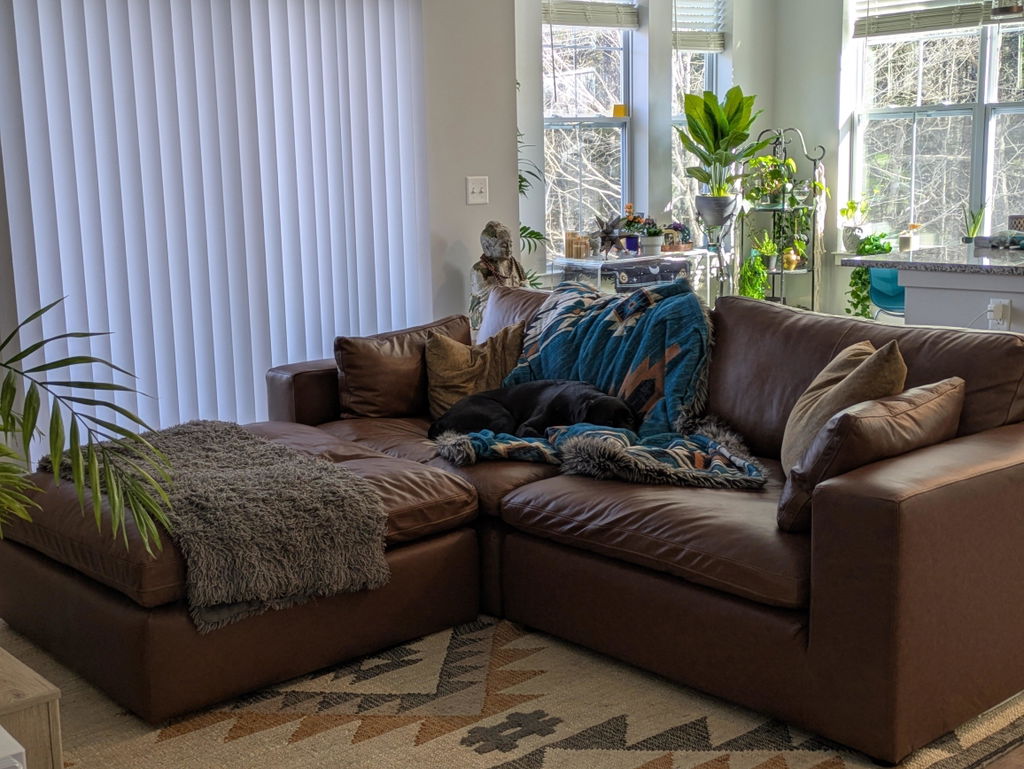
Brown is no longer the automatic default it once was, but it still has a place. Rich chocolate, camel, cognac, and warm taupe can look grounded, comfortable, and high-end when styled well. Leather and faux leather in brown tones remain especially popular in family rooms, traditional spaces, and homes that lean rustic, industrial, or transitional.
Brown furniture tends to feel warmer and more classic than gray. It can also be more forgiving with kids, pets, and heavy use depending on the material. The caution here is that some darker browns can make a room feel heavier, especially if your walls, floors, and lighting are also dark.
If your living room lacks natural light, a very dark brown sectional may absorb more light than you want. In that case, a lighter tan, camel, or warm greige can give you the same cozy effect with a fresher feel.
What about white, black, and bold colors?
White furniture has a strong visual payoff. It looks clean, airy, and expensive, especially in modern or coastal-inspired spaces. But it asks more from your lifestyle. If your home is high traffic, white can become a maintenance decision as much as a design one.
Black furniture can look sleek and striking, but it is less common as the main color for upholstered living room furniture. It can make a room feel sharp and dramatic, though sometimes a little heavy if overused. Black often works better as an accent through coffee tables, side chairs, lighting, or frames rather than the entire seating setup.
As for bold colors like navy, green, rust, or blush, they are popular in a trend-driven way, not in the broad market sense that gray and beige are. A deep green sofa can look amazing. A navy sectional can feel tailored and timeless. But those choices are more personal, and they require more confidence in the room’s direction.
The real answer depends on your room
Asking what is the most popular color for living room furniture is useful, but popularity should be the starting point, not the final decision. The right color depends on your room size, lighting, flooring, wall color, and how you use the space every day.
In small living rooms, lighter shades usually help the room feel more open. Soft gray, cream, sand, and light greige can visually expand the space. In larger rooms, you have more flexibility. You can go darker for contrast or stay light for a more airy look.
Lighting matters too. North-facing rooms often feel cooler, so warm neutrals can balance that out. Bright sun-filled rooms can handle cool gray more easily. If your flooring has strong undertones, your furniture color should work with them rather than fight them. A cool gray sofa next to orange-toned wood floors can feel off unless you add connecting colors through rugs and decor.
How to choose the best furniture color for your lifestyle
For households with kids, pets, or constant use, medium tones usually give you the best balance. They hide more than very light shades and feel less heavy than very dark ones. Gray, greige, taupe, and some textured beige fabrics are especially practical.
If you love a bright, soft, cloud-like look, cream and ivory can absolutely work. Just look for upholstery that is easier to maintain and think about where the piece will live. A formal sitting room and a TV-heavy family room have very different demands.
If you want your furniture to last through changing trends, stick with a neutral base and add personality through smaller pieces. That gives you a lot more flexibility. Pillows, throws, rugs, and accent chairs are far easier to update than a full sectional.
The most popular color for living room furniture by style
Modern and contemporary homes usually lean toward gray, greige, cream, and black-accented neutrals. These colors support clean silhouettes and layered textures without making the room feel busy.
Cozy casual and family-friendly spaces often do well with warm beige, taupe, oatmeal, and soft brown. These colors feel comfortable and approachable, especially with plush upholstery and oversized seating.
If your style is more elevated and trend-aware, cream and warm ivory have been gaining momentum. They pair well with sculptural shapes, soft fabrics, and the kind of relaxed luxury look many shoppers want right now.
That shift is worth paying attention to. Gray is still the most popular overall, but warm neutrals are closing the gap because they make a room feel softer and more inviting.
So, should you buy gray?
If you want the safest popular choice, gray is still the leader for a reason. It is flexible, broadly appealing, easy to style, and well suited to everything from compact loveseats to large modular sectionals. For many shoppers, it is the easiest path to a living room that looks polished without feeling overthought.
But if your home has warm flooring, lots of texture, or a more relaxed design direction, beige, greige, or cream may give you a better result. Popularity helps narrow the field. Comfort, lighting, and how you actually live should make the final call.
At Dreamee Home, that is often where shoppers land - a color that feels current, works with real life, and makes the whole room easier to finish. Choose the shade that gives you room to live comfortably now and still love the look later.