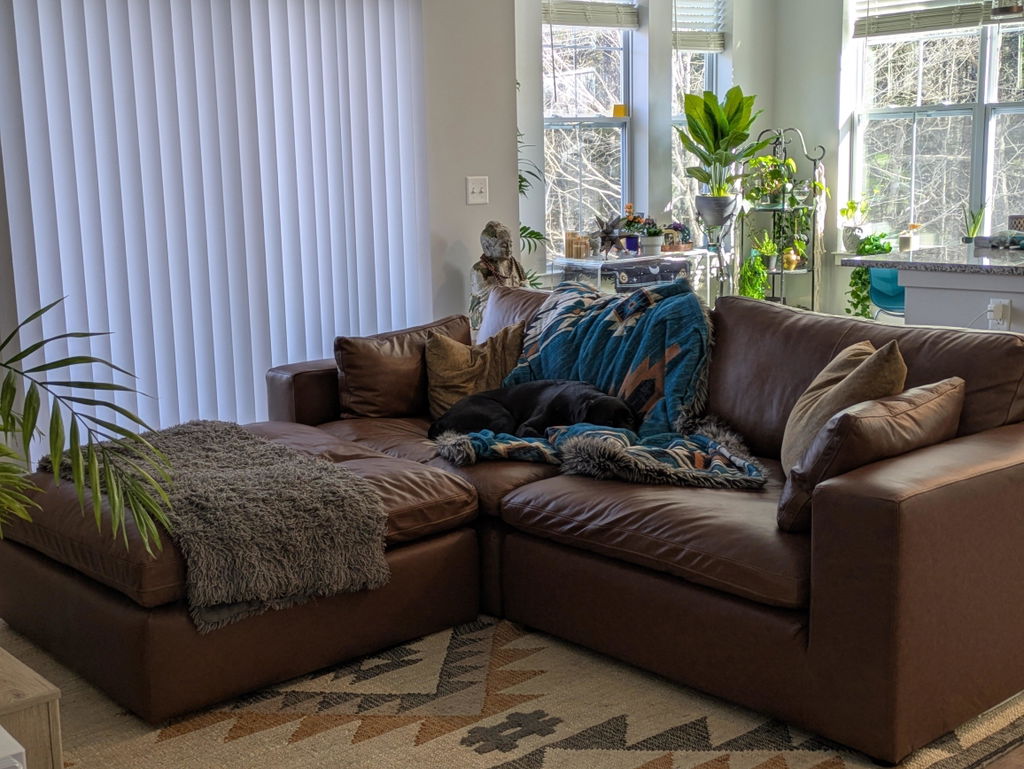

A sofa can be beautifully made and still look unfinished without the right pillows. Learning how to layer throw pillows gives your living room that comfortable, collected look without requiring a full furniture refresh. The best part: a few well-chosen pillow covers and inserts can make a cloud couch, classic sectional, accent chair, or bed feel more personal in minutes.
The goal is not to pile on every pillow you own. It is to build dimension with a mix of sizes, shapes, colors, and textures, while leaving plenty of room for real life. Here is how to create a polished arrangement that still feels easy to sit in.
Start With the Furniture's Scale
Before choosing colors or patterns, look at the size and shape of your furniture. A deep sectional can carry bigger pillows and a fuller arrangement, while a compact apartment sofa needs fewer pieces with more intention. Pillows that are too small can disappear against a large back cushion. Oversized pillows on a small loveseat can quickly feel crowded.
For a standard three-seat sofa, start with 20- or 22-inch square pillows at the outer corners. On a generous sectional or modular sofa, 22- to 24-inch pillows create a more balanced, lounge-ready look. Smaller lumbar pillows, typically 12 by 20 inches or 14 by 24 inches, work well in front because they add contrast without blocking the seat.
Think about how the furniture is used, too. A formal sitting room can handle a more styled arrangement. In a busy family room, keep the pillow count practical enough that everyone has a place to sit without moving half the decor to the floor.
How to Layer Throw Pillows in Three Depths
The simplest way to get the layered look right is to work from back to front. This creates visual depth and makes mixed pillows look deliberate rather than random.
Back layer: anchor the arrangement
Place your largest square pillows in the back, usually at each end of the sofa or in the corners of a sectional. These are your anchors. Choose a solid, a subtle woven fabric, or a quiet pattern that connects with the sofa color.
If your sofa is a light neutral, such as ivory, sand, or soft gray, this layer can bring in warmth with camel, olive, dusty blue, or charcoal. On a darker couch, lighter pillows can create welcome contrast. You do not need stark white unless that crisp, high-contrast look suits the room.
Middle layer: add color or pattern
Your middle layer is where the arrangement gets more personality. Use a slightly smaller square pillow, often 18 to 20 inches, in a pattern, richer color, or more noticeable texture. Try a stripe with an organic print, or a small-scale geometric pattern with a solid velvet.
The key is variation, not competition. If one pillow has a bold botanical print, pair it with a quieter stripe or a solid pillow that repeats one color from the print. When every pillow has a loud pattern, the sofa can look busy from across the room.
Front layer: finish with shape
Finish with a lumbar pillow, round pillow, or petite square in front. A lumbar is especially useful on sectionals and deep-seated sofas because it breaks up a row of squares and offers real back support. A round pillow softens a boxy sofa silhouette and can make a modern living room feel more relaxed.
This front pillow can be the most tactile piece in the group: bouclé, knit, washed linen, faux fur, or a softly quilted fabric. Keep it smaller than the layers behind it so every piece remains visible.
Choose a Color Story, Not a Perfect Match
Matching pillows exactly to the sofa is safe, but it can make the room feel flat. A better approach is to choose a small color story that works with the furniture, rug, artwork, and curtains already in the space.
Use one main color, one supporting color, and one accent or neutral. For example, a cream sectional might be styled with warm taupe as the main color, muted terracotta as the supporting color, and a touch of deep brown or black for contrast. A navy sofa could pair beautifully with soft blue-gray, natural linen, and a small hit of rust.
If your room already has a statement rug, pull two or three colors from it rather than introducing a completely separate palette. This is one of the fastest ways to make a living room look coordinated. It also gives you flexibility when you want to switch pillow covers seasonally without replacing the larger furniture pieces.
Mix Textures So Neutrals Still Feel Interesting
Texture is what keeps a neutral pillow arrangement from looking plain. Even if you only use cream, beige, gray, and brown, mixing materials creates depth and warmth. Combine smooth cotton or linen with nubby bouclé, ribbed knit, soft velvet, or a woven stripe.
For a modern, comfort-first space, pair a linen-look square pillow with a plush boucle lumbar and a woven neutral accent. On a sleek leather sofa, softer fabrics help balance the smooth upholstery. On a highly textured fabric sofa, choose a few cleaner pillow covers so the overall look does not become too heavy.
There is a trade-off with highly textured pillows: they look inviting, but they may require more care in homes with pets, kids, or frequent snack-time movie nights. Removable, washable covers are often the smarter choice for everyday seating.
Use Odd Numbers When the Sofa Allows It
Odd-numbered groupings tend to feel relaxed and natural, especially on sofas and beds. A three-pillow arrangement works well on a smaller sofa: two squares in back and one lumbar in front. On a larger couch, try five pillows arranged as two layered groups with one center lumbar.
Sectionals give you more freedom. Style the outside corners first, then add a smaller grouping where the chaise meets the main seat if it needs visual balance. Do not feel required to fill every corner. A sectional is meant for stretching out, and keeping the chaise relatively clear preserves that inviting, sink-in comfort.
Symmetry works best when your room is more traditional or structured. For a casual contemporary look, use coordinated pillows without making both sides identical. You might repeat the same two colors on each end but use a different pattern or lumbar shape to keep the arrangement from feeling overly formal.
Make the Inserts Look Full, Not Flat
A beautiful cover cannot compensate for a flat insert. For square pillows, choose an insert that is about 2 inches larger than the cover. A 20-inch cover generally looks fuller with a 22-inch insert. The result is a more tailored shape with softly filled corners instead of a limp, under-stuffed appearance.
Down or down-alternative inserts usually offer the most relaxed, designer-inspired look because they can be fluffed and adjusted. Down-alternative is a practical option for homes that prefer an animal-free fill or want easier maintenance. Whichever fill you choose, give pillows a quick fluff every few days, especially on the family sofa.
The familiar center "chop" can create a styled look on soft feather-filled pillows, but it is not required. For a cleaner modern arrangement, simply shape the corners and let the pillow keep its natural fullness.
Build a Pillow Arrangement for Every Room
The same layering principles work beyond the living room. On a bed, begin with sleeping pillows, add Euro shams if you have a tall headboard, then finish with standard decorative squares and one lumbar across the front. A king bed can handle more layers, while a queen bed often looks best with a simpler setup that does not take five minutes to remove every night.
For an accent chair, one lumbar or a single 18-inch pillow is usually enough. The chair should still show its shape and upholstery. On a bench, use a long lumbar or two smaller coordinating pillows placed loosely at one end.
When you are furnishing a whole room, choose pillows after the sofa, rug, and major seating pieces are in place. That order makes it easier to see what the space actually needs. Dreamee Home shoppers can use this approach to pair a comfort-driven sectional with accents that make the room feel finished, not overdone.
Refresh the Look Without Rebuying Everything
Keep a few neutral base pillows and update only the front layer as seasons or tastes change. In warmer months, bring in linen, soft stripes, pale blue, sage, or sun-washed terracotta. For fall and winter, add velvet, knit textures, deeper rust, olive, chocolate, or burgundy.
This approach protects your budget while keeping the room current. It is also easier to store a few pillow covers than an entire collection of bulky inserts. If you are working with an open-concept space, repeat one accent color in the living room and dining area for a connected, room-ready feel.
The best pillow arrangement is the one that welcomes you in at the end of the day. Start with a balanced base, add texture and one or two colors you genuinely love, then leave enough open seat space for the people who make the room feel like home.