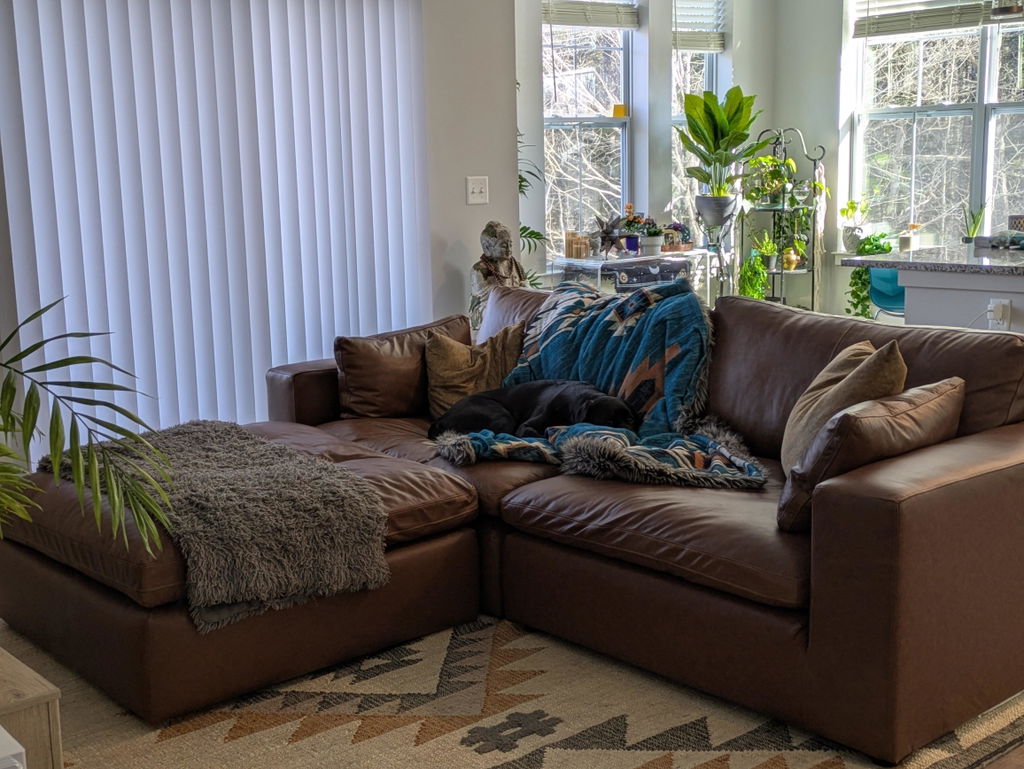

That oversized sectional may look perfect for movie nights, family lounging, and making a small living room feel finished. But can sectionals fit through doors? Usually, yes - especially when the sofa arrives in separate pieces - but the answer depends on more than your front-door width. Door height, hallways, stair turns, elevator size, and the sectional’s individual component dimensions all matter.
A little measuring before you order can save a lot of delivery-day stress. The good news is that many modern sectionals are designed in modular pieces, which makes them far easier to move than one giant traditional sofa. Here is how to check your route, choose the right configuration, and feel confident your new favorite seat will make it inside.
Can Sectionals Fit Through Doors? Start With the Pieces
Most sectionals do not arrive as one fully assembled, L-shaped couch. They commonly ship as individual components: a left-arm chair, right-arm chair, armless chair, chaise, corner unit, or ottoman. Each piece is carried in separately, then connected in the room.
That is why the overall dimensions on a product page are not the only numbers to focus on. A 120-inch sectional can be much easier to bring inside than an 85-inch sofa if its largest single piece is compact. For example, a sectional with three 35-inch-wide seats may pass through a standard entry much more easily than a sofa with a fixed 85-inch frame.
Still, “modular” does not automatically mean “fits anywhere.” Deep cloud-style seating, wide arms, fixed chaises, and high backs can create bulky individual pieces. Always review the dimensions for each component when they are available, not just the total assembled footprint.
Measure the Entire Delivery Path
Your front door is the obvious place to start, but it is only one part of the route. Measure from the curb or driveway to the room where the sectional will live. A piece that clears the exterior door can still get stuck at a narrow interior doorway, a sharp stair landing, or a tight turn at the end of a hallway.
Use a tape measure and write down the clear opening, not the size of the door itself. Open the door fully and measure the usable space between the inside edges of the frame. Then measure height from the floor to the lowest obstruction, such as a door closer, trim, or light fixture.
For a dependable fit check, record these four measurements:
- The width and height of every exterior and interior doorway
- The narrowest point in each hallway, including furniture, railings, and trim
- Stair width, ceiling clearance, and the depth of any landing or turn
- Elevator door opening, interior depth, width, and height for apartment buildings
Compare the Sofa’s Packaged and Unpackaged Dimensions
Furniture dimensions can refer to the assembled piece, while delivery cartons are often larger. If your sectional is boxed, the package must fit through the first part of the route unless the delivery team can safely unpack it outside or in a garage. This is especially relevant for apartments with elevators, where the carton may be too tall or deep even if the sofa component itself would fit.
Ask for the dimensions that matter most: the width, depth, height, and weight of each sectional piece, plus carton dimensions if available. If you are comparing several styles, make a simple note beside each option. This keeps a beautiful deal from becoming a difficult surprise.
A useful rule is to leave a few inches of clearance whenever possible. Exact measurements can work in a perfectly straight route, but furniture has to be tilted, turned, and carried by real people. Tight corners need breathing room.
The diagonal trick for tight doorways
When a sectional piece is slightly wider than a doorway, it may still fit by going through at an angle. Delivery professionals often stand a sofa section on one end, pivot it through the opening, and rotate it once it clears the frame.
This approach works best with low-back pieces and open areas on both sides of the door. It is less reliable with tall, deep, or unusually heavy sections, and it may not work at all in a narrow hall with a quick 90-degree turn. Treat diagonal clearance as a possibility, not a guarantee.
Watch for the Real Problem Areas
Apartment buildings and older homes are often where sectional deliveries get complicated. Standard front doors may be around 36 inches wide, but interior doors are frequently narrower. A 30-inch bedroom or den door can limit where a sectional component can go, even when the main entry is generous.
Stairs are another common challenge. Measure more than the width of the staircase. Check the ceiling height over the steps and the landing where movers need to turn. A long chaise or a large corner unit may clear each individual measurement but still lack the pivoting space needed to change direction.
Elevators deserve the same attention. Measure the elevator door opening separately from the elevator cab. The cab might be roomy enough, but the door opening is often the limiting factor. If you live in a building with a freight elevator, ask management about reservation times, padding requirements, and delivery access before scheduling.
Choose a Sectional That Works With Your Home
If your route is tight, modular seating is typically the smartest choice. Individual armless chairs, ottomans, and corner pieces are easier to carry than a fixed one-piece sectional. They also give you flexibility after delivery: rearrange for a new apartment, separate the pieces for extra seating, or expand the configuration later if your space changes.
A reversible chaise can be another practical option. You get the relaxed look of a sectional without committing to a large fixed corner component, and you can switch the chaise side if you move or rearrange the room.
For upper-floor homes, compact apartment sectionals and low-profile designs are worth a closer look. They can still offer generous comfort while keeping component size manageable. If your household needs maximum lounge space, a multi-piece modular sectional may deliver the big, sink-in feel you want without asking one enormous frame to navigate the stairs.
At Dreamee Home, shopping sectional styles with component dimensions and room layout in mind helps make comfort feel easy from the start. Fast nationwide delivery is a major convenience, but a clear path into the home is what turns delivery day into a smooth setup.
Make Delivery Day Easier
Once you know the sectional can fit, prepare the route. Move shoes, side tables, rugs, floor lamps, and wall decor out of the way. Clear a direct path from the entry to the living room, and protect delicate flooring if conditions are wet outside.
If you selected white glove delivery, share access details in advance, including gate codes, parking restrictions, stairs, elevator procedures, and any particularly narrow turns. This gives the delivery team the best chance to plan appropriately. For self-assembly modular seating, keep the room clear enough to lay out the pieces before connecting them. It is much easier to confirm the configuration when you can see the full arrangement at once.
Before the team leaves, inspect the sectional for visible damage and test the connectors if applicable. Sit on each section, check that the feet are level, and make sure the chaise or corner piece is oriented the way you planned. A few extra minutes now helps you start enjoying the room instead of rearranging it later.
The right sectional should feel like an upgrade, not a logistics project. Measure carefully, choose components that suit your route, and give yourself a little clearance. Then your new sectional can arrive ready for the part that matters most: making everyday time at home more comfortable.